Introduction: Understanding How to Say Hello in Hindi
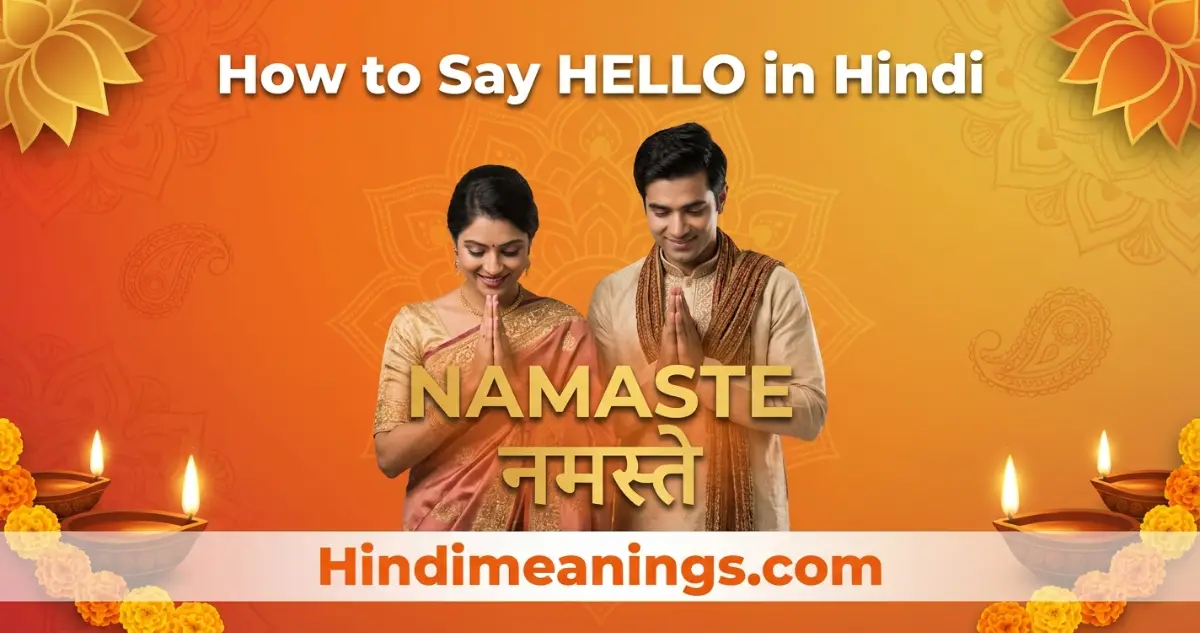
Learning how to say hello in Hindi is the first step to connecting with over 600 million Hindi speakers worldwide. The most common and respectful way to greet someone in Hindi is “Namaste” (नमस्ते), which literally translates to “I bow to you” in English. This beautiful greeting carries deep cultural and spiritual significance, acknowledging the divine presence within each person.
Hindi Meaning: नमस्ते (Namaste) – अभिवादन का सबसे प्रचलित तरीका
English Meaning: Hello, I bow to you, respectful greeting
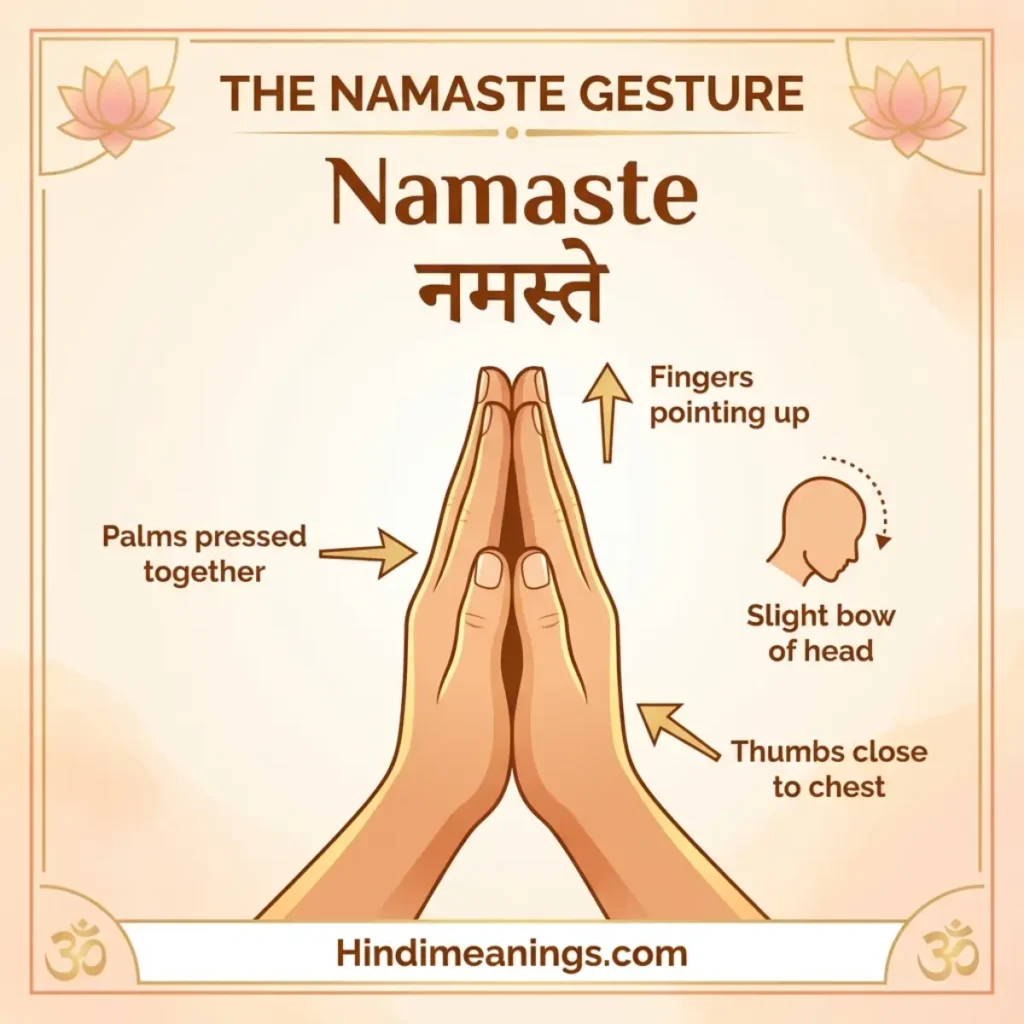
The word Namaste originates from ancient Sanskrit, combining “namah” (bow, obeisance, reverential salutation) and “te” (to you). When you use Namaste, you’re not just saying hello – you’re expressing respect, honor, and recognition of the shared humanity between you and the person you’re greeting. This greeting is typically accompanied by pressing both palms together in front of the chest (Anjali Mudra) with a slight bow of the head.
How to say hello in Hindi varies based on formality, time of day, and the relationship between speakers. While Namaste remains the universal greeting, other variations include Namaskar (more formal), Pranaam (highly respectful for elders), and casual greetings like “Hello” or “Hi” used in urban settings.
How to Say Hello in Hindi: Translations in Indian Languages
When learning how to say hello in Hindi, it’s helpful to understand similar greetings across other Indian languages. Here’s a comprehensive comparison:
| Language | Greeting | Pronunciation | Script |
|---|---|---|---|
| Hindi | Namaste | nuh-mus-tay | नमस्ते |
| Telugu | Namaskaram | nuh-mus-kaa-ram | నమస్కారం |
| Urdu | Adaab/Assalamu Alaikum | a-daab / as-sa-laa-mu a-lay-kum | آداب / السلام علیکم |
| Marathi | Namaskar | nuh-mus-kaar | नमस्कार |
| Kannada | Namaskara | nuh-mus-kaa-ra | ನಮಸ್ಕಾರ |
How to Say Hello in International Languages
Understanding how to say hello in Hindi becomes more meaningful when compared with international greetings:
| Language | Greeting | Pronunciation | Meaning |
|---|---|---|---|
| French | Bonjour | bon-zhoor | Good day |
| Arabic | Marhaban/As-salamu alaykum | mar-ha-ban / as-sa-laa-mu a-lay-kum | Hello/Peace be upon you |
| Spanish | Hola | oh-la | Hello |
| Russian | Zdravstvuyte | zdra-stvooy-te | Hello (formal) |
| German | Guten Tag | goo-ten tahg | Good day |
Word Forms & Variations of Hello in Hindi
Understanding how to say hello in Hindi involves knowing different grammatical forms and contextual variations:
Different Forms of Hindi Greetings
1. Noun Form (संज्ञा):
– Namaste (नमस्ते) – The greeting itself
– Abhivadan (अभिवादन) – The act of greeting
– Swagat (स्वागत) – Welcome
Example Sentence: “Uska namaste bahut adaraniya tha.” (His greeting was very respectful.)
हिंदी में: “उसका नमस्ते बहुत आदरणीय था।”
2. Verb Form (क्रिया):
– Namaste karna (नमस्ते करना) – To greet with Namaste
– Abhivadan karna (अभिवादन करना) – To greet
– Swagat karna (स्वागत करना) – To welcome
Example Sentence: “Main sabhi ko namaste karta hoon.” (I greet everyone with Namaste.)
हिंदी में: “मैं सभी को नमस्ते करता हूँ।”
3. Adjective Form (विशेषण):
– Abhivadaniya (अभिवादनीय) – Greeting-worthy, respectable
– Adaraniya (आदरणीय) – Honorable, worthy of respect
Example Sentence: “Woh ek adaraniya vyakti hain.” (He is a respectable person.)
हिंदी में: “वह एक आदरणीय व्यक्ति हैं।”
4. Adverb Form (क्रिया विशेषण):
– Adarpurvak (आदरपूर्वक) – Respectfully
– Vinayapurvak (विनयपूर्वक) – Humbly
Example Sentence: “Usne adarpurvak namaste kiya.” (He greeted respectfully.)
हिंदी में: “उसने आदरपूर्वक नमस्ते किया।”
Synonyms of Hello in Hindi & Their Usage
Learning how to say hello in Hindi includes understanding various synonyms that convey similar meanings:
| Hindi Synonym | English Equivalent | Pronunciation | Usage Context |
|---|---|---|---|
| नमस्कार (Namaskar) | Respectful greeting | nuh-mus-kaar | Formal occasions |
| प्रणाम (Pranaam) | Deep respect/bow | pruh-naam | Greeting elders |
| स्वागतम् (Swagatam) | Welcome | swa-ga-tam | Welcoming guests |
| सुप्रभात (Suprabhat) | Good morning | su-pra-bhat | Morning greeting |
| शुभ संध्या (Shubh Sandhya) | Good evening | shubh sand-hyaa | Evening greeting |
| नमन (Naman) | Salutation | nuh-man | Reverential greeting |
| वंदन (Vandan) | Salutation/worship | van-dan | Respectful greeting |
| अभिनंदन (Abhinandan) | Felicitation | a-bhi-nan-dan | Congratulatory greeting |
| सादर (Saadar) | With respect | saa-dar | Respectful manner |
| खुशामदीद (Khushamdeed) | Welcome | khush-am-deed | Urdu-influenced welcome |
Usage Examples of Synonyms:
Namaskar: “Meeting mein sabhi ne namaskar kiya.” (Everyone greeted respectfully in the meeting.)
मीटिंग में सभी ने नमस्कार किया।
Pranaam: “Bachhe ne dadi-dadi ko pranaam kiya.” (The child bowed to touch grandparents’ feet.)
बच्चे ने दादी-दादा को प्रणाम किया।
Suprabhat: “Main rozana apne mata-pita ko suprabhat kehta hoon.” (I say good morning to my parents daily.)
मैं रोजाना अपने माता-पिता को सुप्रभात कहता हूँ।
Swagatam: “Mehmanon ka swagatam karna hamari sanskriti hai.” (Welcoming guests is our culture.)
मेहमानों का स्वागतम् करना हमारी संस्कृति है।
Shubh Sandhya: “Shaam ko milte samay shubh sandhya kahein.” (Say good evening when meeting in the evening.)
शाम को मिलते समय शुभ संध्या कहें।
Antonyms of Hello in Hindi & Their Usage
Understanding how to say hello in Hindi also means knowing how to say goodbye and opposite expressions:
| Hindi Antonym | English Equivalent | Pronunciation | Context |
|---|---|---|---|
| अलविदा (Alvida) | Goodbye | al-vi-daa | Formal farewell |
| विदाई (Vidai) | Farewell | vi-daa-ee | Departure |
| शुभ रात्रि (Shubh Ratri) | Good night | shubh raa-tri | Nighttime farewell |
| फिर मिलेंगे (Phir Milenge) | See you again | phir mil-en-ge | Casual goodbye |
| टाटा (Tata) | Bye-bye | taa-taa | Very casual |
| चलते हैं (Chalte Hain) | Let’s go/leave | chal-te hain | Informal departure |
| जाते हैं (Jaate Hain) | We’re going | jaa-te hain | Leaving statement |
| अनादर (Anadar) | Disrespect | an-aa-dar | Opposite of respectful greeting |
| तिरस्कार (Tiraskaar) | Contempt/scorn | ti-ras-kaar | Disrespectful attitude |
| उपेक्षा (Upeksha) | Neglect/ignore | u-pek-shaa | Ignoring someone |
Usage Examples of Antonyms:
Alvida: “Conference ke baad sabhi ne alvida kaha.” (Everyone said goodbye after the conference.)
कॉन्फ्रेंस के बाद सभी ने अलविदा कहा।
Vidai: “Beti ki vidai bahut bhavuk thi.” (The daughter’s farewell was very emotional.)
बेटी की विदाई बहुत भावुक थी।
Shubh Ratri: “Sone se pehle apne parivaar ko shubh ratri kahein.” (Say good night to your family before sleeping.)
सोने से पहले अपने परिवार को शुभ रात्रि कहें।
Phir Milenge: “Dost ne kaha, ‘Phir milenge jaldi’.” (Friend said, ‘We’ll meet again soon’.)
दोस्त ने कहा, ‘फिर मिलेंगे जल्दी’।
Chalte Hain: “Office se nikalne se pehle ‘chalte hain’ bolte hain.” (We say ‘let’s go’ before leaving the office.)
ऑफिस से निकलने से पहले ‘चलते हैं’ बोलते हैं।
Related Hindi Idioms & Phrases About Greetings
When learning how to say hello in Hindi, understanding cultural idioms enriches your communication:
1. “Atithi Devo Bhava” (अतिथि देवो भवः)
Meaning: The guest is equivalent to God
Usage: This ancient Sanskrit phrase reflects India’s hospitality culture.
Example: “Bharat mein atithi devo bhava ki parampara hai.” (In India, there’s a tradition of treating guests as God.)
भारत में अतिथि देवो भवः की परंपरा है।
2. “Haath jodkar milna” (हाथ जोड़कर मिलना)
Meaning: To meet with folded hands (greeting respectfully)
Usage: Describes the physical gesture accompanying Namaste.
Example: “Buzurgon se haath jodkar milna chahiye.” (One should meet elders with folded hands.)
बुजुर्गों से हाथ जोड़कर मिलना चाहिए।
3. “Aadab arz hai” (आदाब अर्ज़ है)
Meaning: I offer my respects (Urdu greeting)
Usage: Formal, courteous greeting in Urdu-speaking communities.
Example: “Shayar ne mehfil mein aadab arz kiya.” (The poet offered respects at the gathering.)
शायर ने महफिल में आदाब अर्ज़ किया।
4. “Charan sparsh karna” (चरण स्पर्श करना)
Meaning: To touch feet (showing ultimate respect)
Usage: Traditional way of greeting elders by touching their feet.
Example: “Bacche Diwali par sabhi buzurgon ke charan sparsh karte hain.” (Children touch elders’ feet on Diwali.)
बच्चे दिवाली पर सभी बुजुर्गों के चरण स्पर्श करते हैं।
5. “Padharo mhare des” (पधारो म्हारे देश)
Meaning: Welcome to my land/home (Rajasthani greeting)
Usage: Warm, hospitable invitation.
Example: “Rajasthan mein atithiyon ka swagat ‘padharo mhare des’ kehkar karte hain.” (In Rajasthan, guests are welcomed saying ‘come to our land’.)
राजस्थान में अतिथियों का स्वागत ‘पधारो म्हारे देश’ कहकर करते हैं।
How to Say Hello in Hindi: Meaning & Usage in Different Contexts
Understanding how to say hello in Hindi requires knowing formal and informal variations:
| Context | Hindi Greeting | English Meaning | Usage Scenario |
|---|---|---|---|
| Formal/Business | Namaskar (नमस्कार) | Respectful hello | Office meetings, conferences |
| Informal/Friends | Hi/Hello/Kya haal hai (क्या हाल है) | What’s up | Casual conversations |
| With Elders | Pranaam (प्रणाम) | Deep respect | Greeting grandparents, teachers |
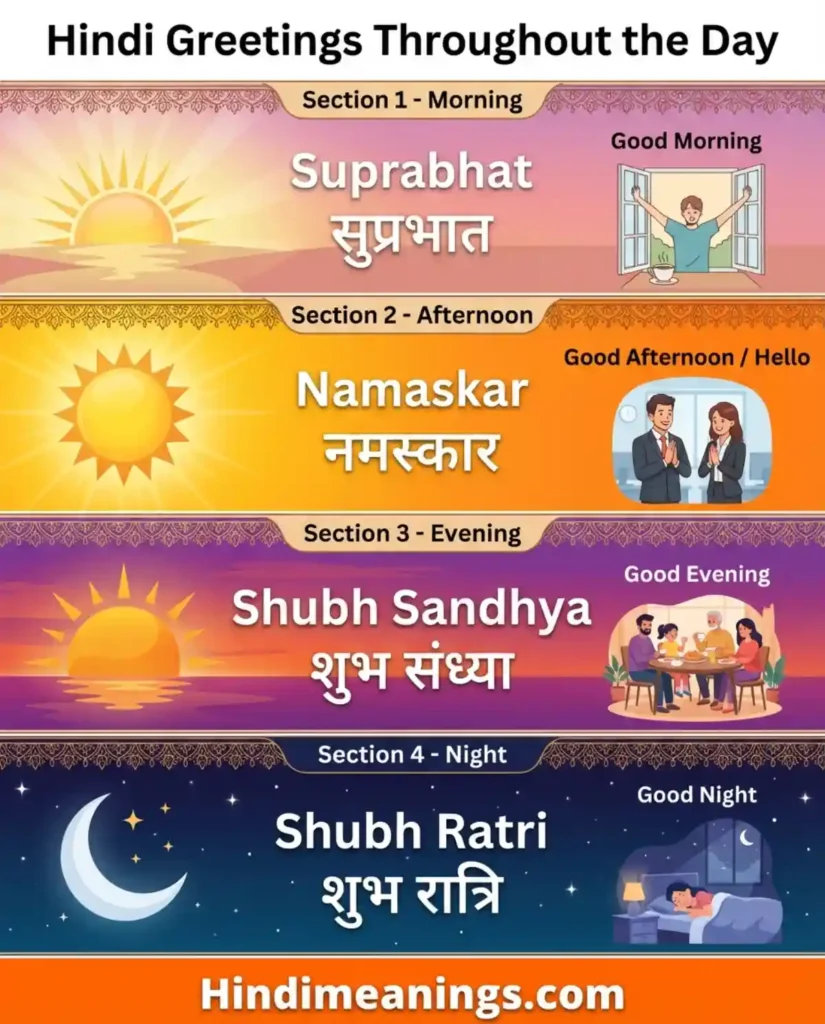
| Morning | Suprabhat (सुप्रभात) | Good morning | Before noon |
| Evening | Shubh Sandhya (शुभ संध्या) | Good evening | After 4 PM |
| Night | Shubh Ratri (शुभ रात्रि) | Good night | Before bed |
| Religious | Ram Ram/Jai Shri Ram | Religious greetings | Spiritual contexts |
| Muslim Community | Assalamu Alaikum | Peace be upon you | Islamic greeting |
| Sikh Community | Sat Sri Akal | God is the ultimate truth | Sikh greeting |
| Universal | Namaste (नमस्ते) | I bow to you | Any time, any person |
Sentence Examples for Different Contexts:
Formal Setting: “Board meeting mein chairman ne sabhi ko namaskar kaha.” (The chairman greeted everyone respectfully in the board meeting.)
बोर्ड मीटिंग में चेयरमैन ने सभी को नमस्कार कहा।
Informal Setting: “Dost se mile toh usne kaha, ‘Kya haal hai bhai?'” (When I met my friend, he said, ‘What’s up, brother?’)
दोस्त से मिले तो उसने कहा, ‘क्या हाल है भाई?’
With Elders: “Maine apne guru ji ko pranaam karke aashirvaad liya.” (I greeted my teacher respectfully and received blessings.)
मैने अपने गुरु जी को प्रणाम करके आशीर्वाद लिया।
Morning Context: “Subah jaldi uthkar mummy ko suprabhat kaha.” (Woke up early in the morning and said good morning to mom.)
सुबह जल्दी उठकर मम्मी को सुप्रभात कहा।
Religious Context: “Mandir mein jai shri ram bolkar pranam kiya.” (Greeted with ‘Jai Shri Ram’ at the temple.)
मंदिर में जय श्री राम बोलकर प्रणाम किया।
Frequently Asked Questions (FAQs) About How to Say Hello in Hindi
1. How do you say hello in Hindi?
The most common way to say hello in Hindi is “Namaste” (नमस्ते), pronounced as “nuh-mus-tay.” It means “I bow to you” and is used as a respectful greeting at any time of day.
2. What is the difference between Namaste and Namaskar?
Namaste (नमस्ते) is a general, friendly greeting suitable for most situations. Namaskar (नमस्कार) is more formal and respectful, typically used when greeting elders, teachers, or in business settings.
3. How do you pronounce Namaste correctly?
Namaste is pronounced “nuh-MUS-tay” with emphasis on the middle syllable. The ‘t’ is soft, similar to the ‘t’ in French “tu.”
4. Can I use Namaste to say goodbye?
Yes! Namaste can be used both for hello and goodbye in Hindi. It’s a versatile greeting that works for meeting someone and taking leave.
5. What is the gesture that accompanies Namaste?
The Namaste gesture involves pressing both palms together in front of your chest (called Anjali Mudra) with fingers pointing upward and giving a slight bow of the head.
6. How do you say good morning in Hindi?
“Suprabhat” (सुप्रभात), pronounced “su-pra-bhat,” is the Hindi greeting for good morning. It’s used from dawn until noon.
7. What is Pranaam in Hindi?
Pranaam (प्रणाम) is a highly respectful greeting used for elders, teachers, and revered individuals. It often involves touching the feet of elders to seek their blessings.
8. Is saying “Hi” or “Hello” acceptable in Hindi-speaking regions?
Yes, in urban areas and among younger generations, English greetings like “Hi” and “Hello” are commonly used and perfectly acceptable for casual conversations.
9. How do you greet someone in the evening in Hindi?
Use “Shubh Sandhya” (शुभ संध्या), pronounced “shubh sand-hyaa,” which means “good evening.” This is typically used after 4 PM.
10. What does “Assalamu Alaikum” mean and when is it used?
“Assalamu Alaikum” (السلام علیکم) means “peace be upon you” and is the traditional Islamic greeting used among Muslims in India. The response is “Wa Alaikum Assalam.”
11. How do you say goodbye in Hindi?
“Alvida” (अलविदा) is the formal way to say goodbye. Informally, you can say “Phir Milenge” (फिर मिलेंगे), meaning “we’ll meet again,” or simply use Namaste.
12. What is the cultural significance of Namaste?
Namaste originates from Sanskrit and carries spiritual significance, acknowledging the divine light within each person. It represents respect, equality, and the interconnectedness of all beings.
13. Can foreigners use Namaste when visiting India?
Absolutely! Indians appreciate when foreigners use Namaste as it shows respect for their culture. It’s universally understood and welcomed.
14. How do Sikhs greet each other?
Sikhs commonly use “Sat Sri Akal” (सत श्री अकाल), which means “God is the ultimate truth.” This is the traditional Sikh greeting.
15. What is the difference between formal and informal greetings in Hindi?
Formal greetings (Namaskar, Pranaam) are used with elders, strangers, or in professional settings. Informal greetings (Hi, Namaste, Kya haal hai) are used with friends and peers.
16. How do you say “nice to meet you” in Hindi?
“Aapse milkar khushi hui” (आपसे मिलकर खुशी हुई), which literally means “I am happy to meet you.”
17. Is there a specific time to use different Hindi greetings?
Yes! Use Suprabhat (good morning) before noon, Shubh Sandhya (good evening) after 4 PM, and Shubh Ratri (good night) before bed. Namaste works anytime.
18. What does “Ram Ram” mean as a greeting?
“Ram Ram” is a religious greeting common in North India, particularly Uttar Pradesh and Rajasthan. It invokes Lord Ram and is used as a casual, friendly hello.
19. How do you respond when someone says Namaste to you?
Simply say “Namaste” back with the same hand gesture (Anjali Mudra) and a slight bow. You can also add “ji” for extra respect: “Namaste ji.”
20. What is “Jai Shri Ram” as a greeting?
“Jai Shri Ram” (जय श्री राम) means “Glory to Lord Ram.” It’s used as both a greeting and an expression of devotion, particularly among Hindu devotees.
21. Can you use Namaste in emails or text messages?
Yes! Namaste is commonly used in written communication, including emails, WhatsApp messages, and letters. The folded hands emoji (🙏) often represents Namaste digitally.
22. How do you greet a teacher in Hindi?
Use “Pranaam” or “Namaskar” with respect terms like “Guru ji” (गुरु जी) or “Teacher ji.” Traditionally, students may touch the teacher’s feet as a sign of ultimate respect.
23. What is the Sanskrit origin of Namaste?
Namaste comes from Sanskrit: “namah” (नमः – bow, obeisance) + “te” (ते – to you). It dates back to ancient Vedic scriptures from around 1500 BCE.
24. How do you say hello in Urdu?
In Urdu, common greetings include “Adaab” (آداب), “Assalamu Alaikum” (السلام علیکم), and “Khush Aamdeed” (خوش آمدید – welcome).
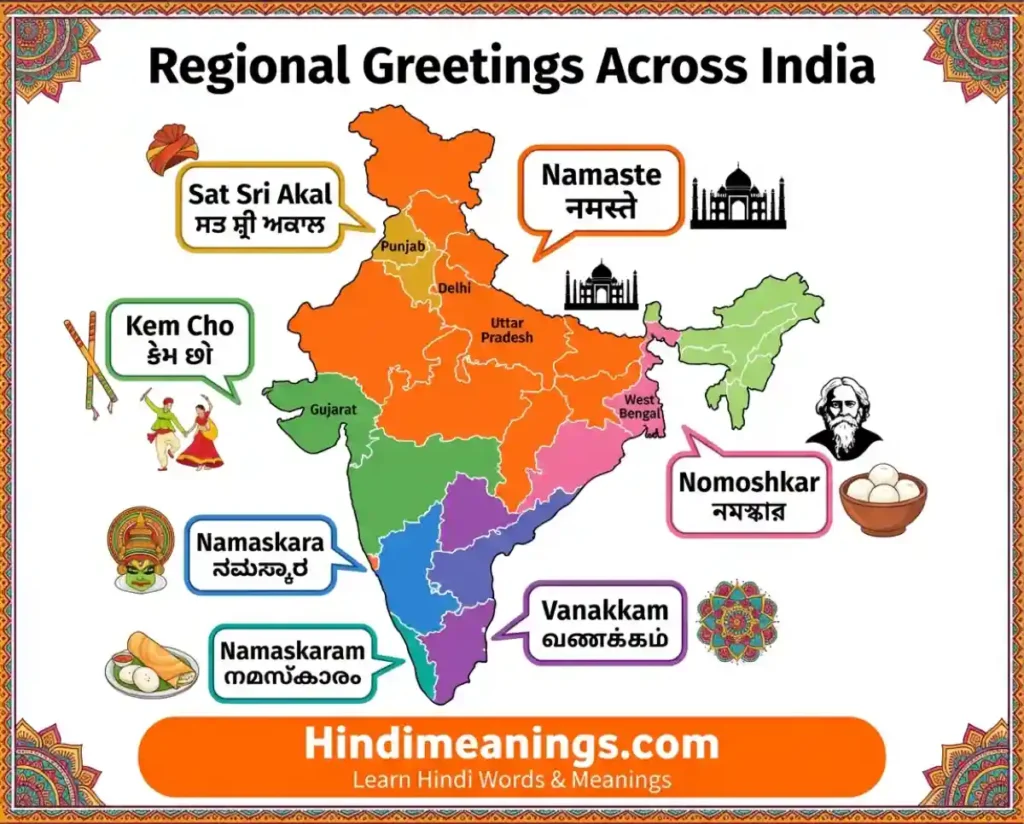
25. What are regional variations of hello in India?
India has diverse greetings: Vanakkam (Tamil), Nomoshkar (Bengali), Namaskaram (Malayalam), Kemcho (Gujarati), and more, reflecting the country’s linguistic richness.
Conclusion: Mastering How to Say Hello in Hindi
Learning how to say hello in Hindi opens doors to meaningful connections with millions of Hindi speakers worldwide. Whether you use the universal “Namaste,” the formal “Namaskar,” or the deeply respectful “Pranaam,” each greeting carries cultural significance and shows your respect for Indian traditions.
Remember these key points when greeting in Hindi:
– Namaste is your go-to greeting for any situation
– Use appropriate formality based on age and relationship
– Accompany verbal greetings with the Anjali Mudra gesture
– Time-specific greetings (Suprabhat, Shubh Sandhya) add authenticity
– Respect cultural nuances and religious variations
By mastering these Hindi greetings, you’re not just learning a language—you’re embracing a culture that values respect, warmth, and human connection. Start practicing today, and watch how this simple word transforms your interactions with Hindi-speaking communities around the world!
External Resources:
1. Preply Hindi Greetings Guide
2. HindiPod101 – How to Say Hello
3. Ling App Hindi Learning
4. Wikipedia – Namaste
5. Rocket Languages Hindi Greetings