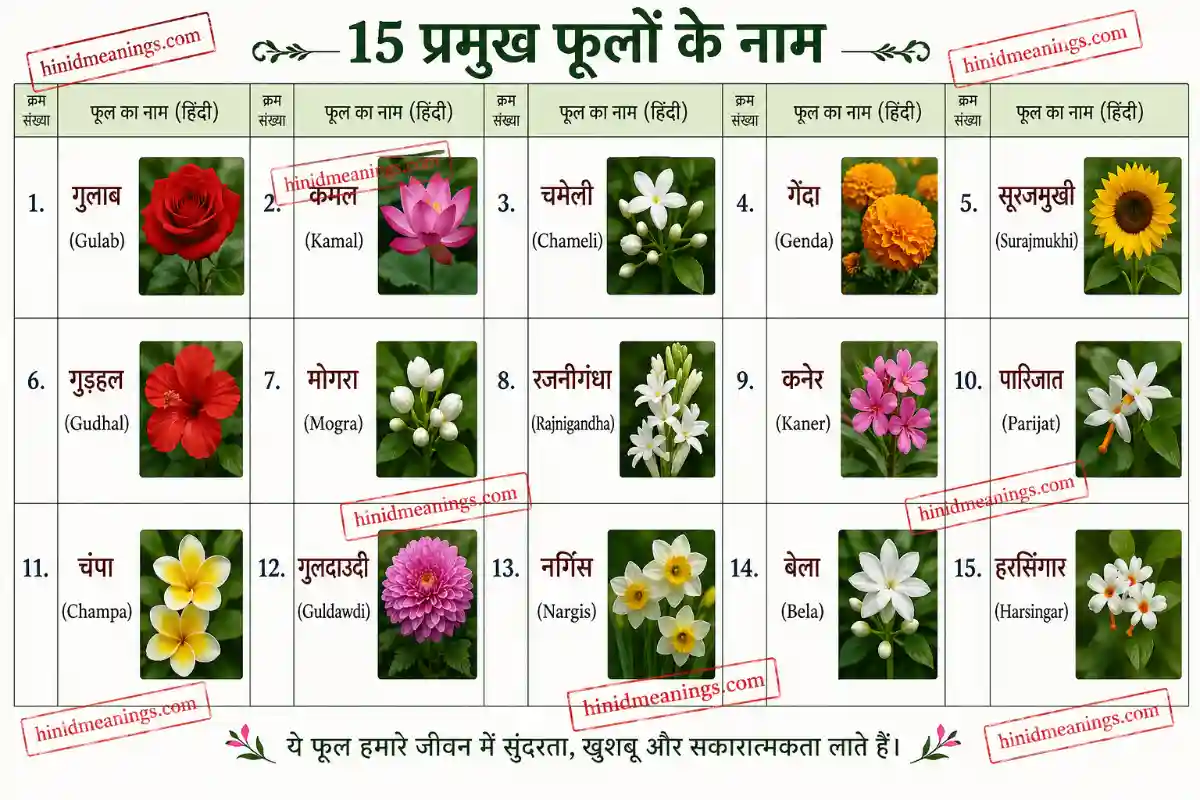
Are you searching for Hindi names for flowers? Whether you are a student, teacher, language learner, or nature lover, knowing the names of flowers in Hindi is a wonderful way to connect with Indian culture, nature, and the beautiful Hindi language. In this complete guide, you will find phoolon ke Hindi naam (फूलों के हिंदी नाम) along with their scientific names, meanings, importance, and translations in multiple languages.
India is home to thousands of flowering plants, and flowers hold a very special place in Indian culture — from religious rituals and wedding decorations to Ayurvedic medicine and poetry. Learning flower names in Hindi is not just vocabulary building; it is a journey into the heart of Indian tradition and biodiversity.
Why Learn Hindi Names for Flowers?
Flowers are deeply woven into everyday Indian life. From offering गुलाब (Gulab – Rose) to loved ones to decorating temples with गेंदा (Genda – Marigold), flowers carry cultural, spiritual, and emotional meaning. Students learning Hindi vocabulary, parents teaching children, and language enthusiasts will all benefit from this guide to flowers name in Hindi and English.
Just like we have shared Daily Use Things Names in Hindi and Planets Names in Hindi and English, this guide follows the same structured approach for easy learning.
15 Popular Flowers – Hindi Names, Scientific Names & Importance
1. गुलाब (Gulab) – Rose
Scientific Name: Rosa spp.
Hindi Name: गुलाब
English Name: Rose
The Rose is the most beloved flower in the world and India’s most gifted bloom. In Hindi, it is called गुलाब (Gulab), a word borrowed from Persian meaning “water of flowers.” The rose symbolises love, beauty, and passion. It is widely used in perfumes, rose water (गुलाब जल), Ayurvedic medicines, and Indian sweets like gulkand. Red roses are offered during festivals and ceremonies, while rose petals are scattered in religious rituals. India is one of the world’s largest exporters of rose oil, known as attar.
2. कमल (Kamal) – Lotus
Scientific Name: Nelumbo nucifera
Hindi Name: कमल
English Name: Lotus
The Lotus (कमल) is the National Flower of India and holds supreme importance in Hindu, Buddhist, and Jain traditions. It grows in muddy water yet blooms in pure beauty, symbolising purity, enlightenment, and divine grace. The goddess Lakshmi and Lord Brahma are depicted seated on a lotus. Every part of the lotus — seeds, roots (kamal kakdi), petals — is edible and medicinally valuable. Lotus seeds are used in traditional medicine to treat insomnia and anxiety.
3. चमेली (Chameli) – Jasmine
Scientific Name: Jasminum officinale
Hindi Name: चमेली
English Name: Jasmine
चमेली (Chameli) is one of India’s most fragrant flowers, widely used in hair oils, garlands, and perfumes. Its intoxicating fragrance makes it a favourite for weddings and religious offerings. Jasmine essential oil is used globally in aromatherapy to reduce stress and anxiety. In many Indian states, women traditionally adorn their hair with chameli flowers on auspicious days. It is also known as the “Queen of the Night” for its stronger fragrance after sunset.
4. गेंदा (Genda) – Marigold
Scientific Name: Tagetes erecta
Hindi Name: गेंदा
English Name: Marigold
गेंदा (Genda) is the most commonly used flower in Indian festivals and ceremonies. Bright orange and yellow marigold garlands are inseparable from weddings, Diwali, Dussehra, and temple decorations. The flower has strong antifungal and antibacterial properties and is used in herbal skin care. India is the world’s largest producer of marigolds. The flower’s vivid colour also makes it a natural dye. Farmers also grow marigolds as a companion plant to repel pests from vegetable crops.
5. सूरजमुखी (Surajmukhi) – Sunflower
Scientific Name: Helianthus annuus
Hindi Name: सूरजमुखी
English Name: Sunflower
The name सूरजमुखी (Surajmukhi) literally means “one who faces the sun” — a perfect description of this iconic flower. Sunflowers track the sun’s movement from east to west daily, a phenomenon called heliotropism. Sunflower seeds and oil are extremely nutritious, rich in Vitamin E and healthy fats. Sunflower oil is one of the most popular cooking oils in India and worldwide. The flower also symbolises positivity, loyalty, and longevity.
6. गुड़हल (Gudhal) – Hibiscus
Scientific Name: Hibiscus rosa-sinensis
Hindi Name: गुड़हल
English Name: Hibiscus / China Rose
गुड़हल (Gudhal) is the state flower of Kerala and one of the most revered flowers in Hindu worship, particularly offered to Goddess Kali and Lord Ganesha. Its bright red petals are used in Ayurvedic hair oils to prevent hair loss and promote growth. Hibiscus tea, made from dried petals, is gaining global popularity for its ability to lower blood pressure and boost immunity. The flower also serves as a natural food colouring agent.
7. मोगरा (Mogra) – Arabian Jasmine
Scientific Name: Jasminum sambac
Hindi Name: मोगरा
English Name: Arabian Jasmine / Mogra
मोगरा (Mogra) is a small, intensely fragrant white flower that is the National Flower of the Philippines and deeply beloved in India. It is widely used in making gajras (hair garlands) and incense sticks. The essential oil of Mogra is one of the costliest floral oils in the world, used in luxury perfumes. In Indian classical music and poetry, Mogra is a common metaphor for purity and feminine grace.
8. रजनीगंधा (Rajnigandha) – Tuberose
Scientific Name: Polianthes tuberosa
Hindi Name: रजनीगंधा
English Name: Tuberose
The name रजनीगंधा (Rajnigandha) means “night-fragrant” — and truly, this flower releases its most powerful scent after dark. It is extensively cultivated across West Bengal, Karnataka, and Tamil Nadu for the cut flower industry. Tuberose absolute is a key ingredient in high-end French perfumes. In India, Rajnigandha garlands are commonly used in wedding ceremonies and are offered during religious functions. The flower also has mild sedative properties and is used in traditional Ayurvedic formulations.
9. कनेर (Kaner) – Oleander
Scientific Name: Nerium oleander
Hindi Name: कनेर
English Name: Oleander
कनेर (Kaner) is a beautiful yet toxic flowering shrub that is commonly found along Indian roadsides, parks, and temple gardens. It blooms in pink, red, yellow, and white. While all parts of the plant are poisonous if ingested, it is used carefully in traditional medicine for treating skin conditions and as a cardiac tonic. The flower is also offered in some regional Hindu rituals. Due to its drought tolerance, Kaner is widely planted for landscaping in dry and semi-arid regions of India.
10. पारिजात (Parijat) – Night-Flowering Jasmine
Scientific Name: Nyctanthes arbor-tristis
Hindi Name: पारिजात
English Name: Night-flowering Jasmine / Coral Jasmine
पारिजात (Parijat) is a mythological flower from Hindu scriptures, said to have originated during the churning of the cosmic ocean (Samudra Manthan). It is the State Flower of West Bengal and Uttar Pradesh. The tree blooms at night, and the flowers fall to the ground at dawn — making them unique natural offerings to God without being plucked. In Ayurveda, Parijat leaves are used to treat fever, joint pain, and sciatica.
11. चंपा (Champa) – Frangipani
Scientific Name: Plumeria alba
Hindi Name: चंपा
English Name: Frangipani / Plumeria
चंपा (Champa) is famous for its creamy white and yellow blossoms with a sweet, exotic fragrance. Champa oil is used in premium Indian perfumes and incense. The flower is closely associated with Buddhist temples across Southeast Asia. In Indian poetry and folk songs, Champa is a symbol of longing and beauty. The tree is also used in traditional medicine to treat skin rashes and inflammatory conditions.
12. गुलदाउदी (Guldawdi) – Chrysanthemum
Scientific Name: Chrysanthemum morifolium
Hindi Name: गुलदाउदी
English Name: Chrysanthemum
गुलदाउदी (Guldawdi) blooms in autumn and is a popular garden flower across India. It is the National Flower of Japan and symbolises long life and happiness. In China and Japan, chrysanthemum tea is consumed for its antioxidant benefits. In India, it is used in garlands, floral arrangements, and Ayurvedic preparations for treating headaches and cold symptoms. The flower comes in a spectacular variety of colours including white, yellow, red, pink, and purple.
13. नर्गिस (Nargis) – Daffodil
Scientific Name: Narcissus pseudonarcissus
Hindi Name: नर्गिस
English Name: Daffodil / Narcissus
नर्गिस (Nargis) is a symbol of spring and new beginnings. It grows beautifully in the valleys of Kashmir and Himachal Pradesh, where it blooms between February and April. The name “Nargis” is also a popular Hindi and Urdu name for girls, meaning “daffodil.” In Persian poetry and Urdu literature, Nargis is a symbol of the beloved’s eyes. The bulbs of daffodils contain alkaloids used in pharmaceutical research, particularly for treating Alzheimer’s disease.
14. बेला (Bela) – Jasmine Variety
Scientific Name: Jasminum multiflorum
Hindi Name: बेला
English Name: Star Jasmine / Downy Jasmine
बेला (Bela) is a delicate white jasmine variety known for its soft fragrance and star-shaped blossoms. It is widely cultivated in home gardens across India and used for making fragrant garlands. Bela is commonly offered in temples and used in hair adornments. Its calming fragrance is believed to promote peace and mental well-being. Bela is also used in the preparation of natural incense and floral waters.
15. हरसिंगार (Harsingar) – Night Jasmine
Scientific Name: Nyctanthes arbor-tristis
Hindi Name: हरसिंगार
English Name: Night Jasmine / Parijat
हरसिंगार (Harsingar) — also another name for Parijat — is the State Flower of Jharkhand and West Bengal. The small white blossoms with orange stems fall at dawn like a natural carpet. It is highly valued in Ayurveda for treating fever (especially dengue fever), arthritis, and respiratory ailments. Scientifically, the leaves have been found to contain compounds with anti-inflammatory and anti-malarial properties. The beautiful contrast of white petals and saffron-orange stalks makes Harsingar one of India’s most visually distinctive flowers.
Hindi Names for Flowers – Quick Reference Table
Here is a complete table of flowers name in Hindi with their English names and scientific names for quick reference:
| # | Hindi Name | Transliteration | English Name | Scientific Name |
|---|---|---|---|---|
| 1 | गुलाब | Gulab | Rose | Rosa spp. |
| 2 | कमल | Kamal | Lotus | Nelumbo nucifera |
| 3 | चमेली | Chameli | Jasmine | Jasminum officinale |
| 4 | गेंदा | Genda | Marigold | Tagetes erecta |
| 5 | सूरजमुखी | Surajmukhi | Sunflower | Helianthus annuus |
| 6 | गुड़हल | Gudhal | Hibiscus | Hibiscus rosa-sinensis |
| 7 | मोगरा | Mogra | Arabian Jasmine | Jasminum sambac |
| 8 | रजनीगंधा | Rajnigandha | Tuberose | Polianthes tuberosa |
| 9 | कनेर | Kaner | Oleander | Nerium oleander |
| 10 | पारिजात | Parijat | Night-flowering Jasmine | Nyctanthes arbor-tristis |
| 11 | चंपा | Champa | Frangipani | Plumeria alba |
| 12 | गुलदाउदी | Guldawdi | Chrysanthemum | Chrysanthemum morifolium |
| 13 | नर्गिस | Nargis | Daffodil | Narcissus pseudonarcissus |
| 14 | बेला | Bela | Star Jasmine | Jasminum multiflorum |
| 15 | हरसिंगार | Harsingar | Night Jasmine | Nyctanthes arbor-tristis |
Flowers Names in Other Languages – Multilingual Table
For students and language learners, here is a multilingual reference table showing flower names in Hindi, Tamil, Telugu, Kannada, Bengali, Marathi, Urdu, Sanskrit, Arabic, and Spanish:
| English | Hindi | Sanskrit | Tamil | Telugu | Bengali | Marathi | Urdu |
|---|---|---|---|---|---|---|---|
| Rose | गुलाब | पाटलः (Patalah) | ரோஜா (Roja) | గులాబీ (Gulabi) | গোলাপ (Golap) | गुलाब (Gulab) | گلاب (Gulab) |
| Lotus | कमल | पद्मः (Padma) | தாமரை (Thamarai) | కమలం (Kamalam) | পদ্ম (Padma) | कमळ (Kamal) | کنول (Kamal) |
| Jasmine | चमेली | मालती (Malati) | மல்லிகை (Malligai) | మల్లె (Malle) | জুঁই (Jui) | जाई (Jai) | چنبیلی (Chameli) |
| Marigold | गेंदा | स्थलपद्म (Sthalapadma) | சாமந்தி (Samanthi) | బంతి (Banthi) | গাঁদা (Ganda) | झेंडू (Zhendu) | گیندا (Genda) |
| Sunflower | सूरजमुखी | सूर्यमुखी (Suryamukhi) | சூரியகாந்தி (Suriyaganthi) | పొద్దుతిరుగుడు (Podduthiragud) | সূর্যমুখী (Suryamukhi) | सूर्यफूल (Suryaphool) | سورج مکھی (Surajmukhi) |
| Hibiscus | गुड़हल | जपा (Japa) | செம்பருத்தி (Chemparuthi) | మందారం (Mandaram) | জবা (Joba) | जास्वंद (Jaswand) | گڑہل (Gudhal) |
| Lotus (Blue) | नीलकमल | नीलोत्पल (Nilotpala) | நீல தாமரை | నీలి కమలం | নীল পদ্ম | निळे कमळ | نیل کمل |
| Chrysanthemum | गुलदाउदी | शतपत्री (Shatpatri) | சாமந்தி (Samanthi) | చామంతి (Chamanthi) | চন্দ্রমল্লিকা (Chandramalika) | शेवंती (Shevanti) | گلداؤدی (Guldaudi) |
Frequently Asked Questions – Hindi Names for Flowers
What is the Hindi name of Rose?
The Hindi name of Rose is गुलाब (Gulab). It is the most popular flower in India and is widely used in perfumes, festivals, and religious ceremonies.
What is the National Flower of India in Hindi?
The National Flower of India is कमल (Kamal), known in English as the Lotus. Its scientific name is Nelumbo nucifera. It symbolises purity, beauty, and divine grace.
What is Sunflower called in Hindi?
Sunflower is called सूरजमुखी (Surajmukhi) in Hindi, which literally means “one who faces the sun.” It is an important oil seed crop in India.
What is Marigold called in Hindi?
Marigold is called गेंदा (Genda) in Hindi. It is the most commonly used flower in Indian festivals, weddings, and religious functions.
Which flower has the most fragrance in Hindi culture?
Among all Hindi-named flowers, मोगरा (Mogra – Arabian Jasmine) and रजनीगंधा (Rajnigandha – Tuberose) are considered the most fragrant, especially after sunset. They are widely used in perfumes and garlands.
What are some Hindi flower names for girls?
Many Hindi flower names are also used as beautiful Indian girls’ names. Popular examples include: कमल (Kamal), चमेली (Chameli), नर्गिस (Nargis), रजनी (Rajni), चंपा (Champa), and बेला (Bela).
Conclusion
Learning Hindi names for flowers (फूलों के हिंदी नाम) is a rich and rewarding experience that combines vocabulary building with cultural discovery. From the sacred कमल (Kamal – Lotus) to the fragrant मोगरा (Mogra – Arabian Jasmine), each flower carries its own unique story, significance, and scientific importance.
Whether you are a student looking for flowers name in Hindi for school, a teacher preparing lesson plans, or simply a language lover, this complete guide covers everything you need. We hope this list of phoolon ke naam Hindi mein helps you in your learning journey.
If you enjoyed this article, also explore Daily Use Things Names in Hindi, Planets Names in Hindi and English, and Learn Hindi Numbers 1 to 10 for more vocabulary building resources.
For more information on Indian flowers and their botanical details, you can visit the Botanical Survey of India — the official authority on Indian plant species.